
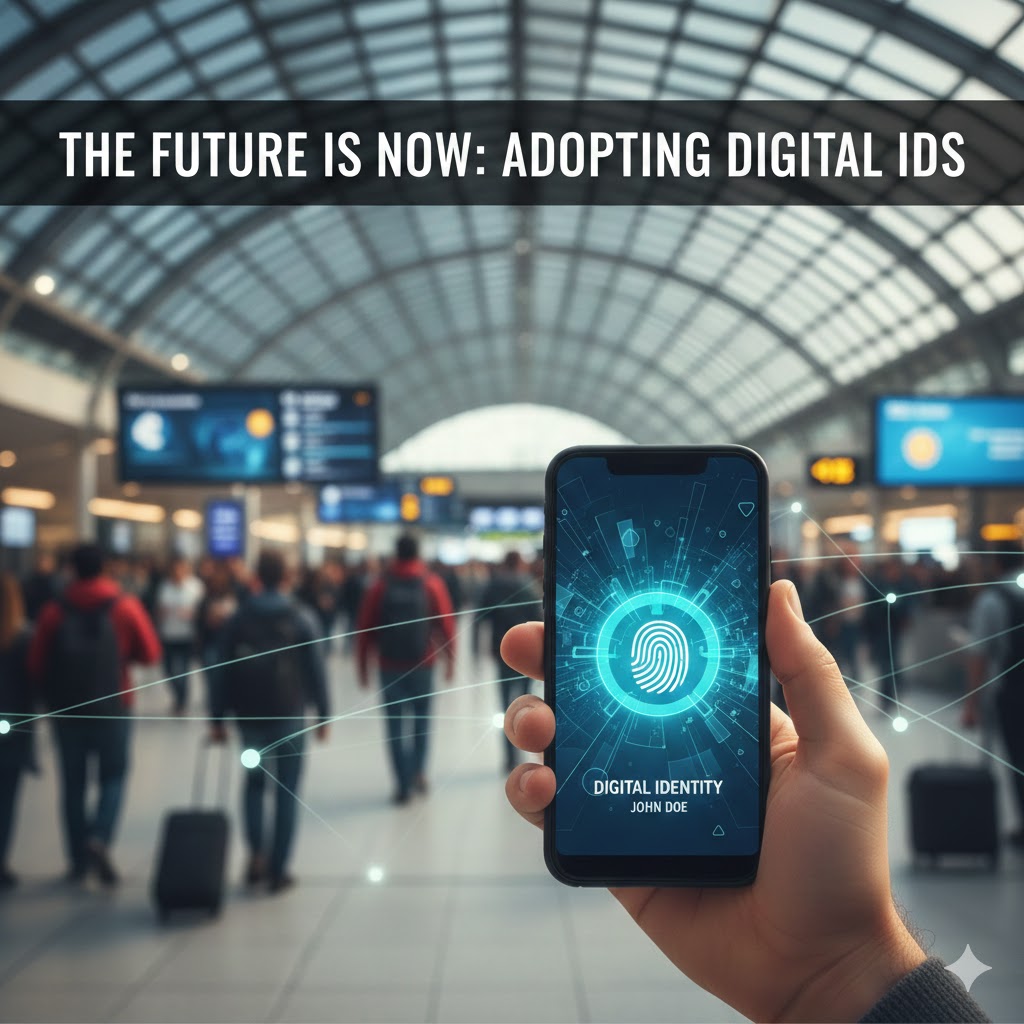
Digital identification systems, commonly referred to as “digital IDs,” are poised to revolutionize how individuals authenticate themselves in an increasingly interconnected society. As governments, businesses, and international organizations modernize their services, digital IDs are emerging as a fundamental tool for secure, efficient, and inclusive identity management.
What Is a Digital ID?
A digital ID is an electronic representation of an individual’s identity that can be utilized to verify their identity in digital environments. It typically relies on secure technologies such as biometrics, cryptography, mobile devices, or digital certificates. A digital ID may be issued by a government authority, a private institution, or through a decentralized identity system.
Unlike a physical ID card, a digital ID enables identity verification across various online and offline scenarios, often with enhanced security and convenience.
Traditional IDs vs. Digital IDs
Traditional IDs
Feature Traditional IDs are physical
Format Paper or Plastic documents
Verification Method Visual Inspection/manual checks
Risk Exposure Susceptible to theft, forgery or loss
Convenience In-person use only
Data Control Data is centralized and the owner has little or no control
Digital IDs
Feature Electronic credentials stored on remote servers or devices
Format Digital
Verification Method Automated verification using cryptography, biometrics and/or secure authentication
Risk Exposure Strong protection even in the presence of cyber threats
Convenience Accessible across both physical and digital services
Data Control Can offer granular (highly detailed and/or specific) permissions
Overall, digital IDs offer wider functionality, although they require robust infrastructure and privacy protections.
Benefits of Digital IDs
- Greater Convenience: Individuals can access a range of services such as banking, healthcare, and government benefits with ease.
- Enhanced Security: Encrypted credentials and biometrics make digital IDs more resistant to forgery and impersonation.
- Financial Inclusion: Digital identity systems help unbanked populations access financial services without relying on physical documents.
- Efficiency for Governments and Businesses: Automation reduces paperwork, processing times, and administrative costs.
- Support for Digital Transformation: Digital IDs unlock advanced capabilities such as digital signatures, e-voting, and automated Know Your Customer (KYC) processes.
Common Applications of Digital IDs
- Banking and Payments: Customer verification, online account opening, mobile transactions.
- Healthcare: Patient identification, accessing medical records, digital health insurance.
- Government Services: Tax filing, social benefits distribution, digital signatures, voting.
- Transportation: ePassports, digital driver’s licenses, airport security.
- Education: Online exam authentication, student records.
- eCommerce & Platforms: Age verification, fraud prevention, online identity checks.
Pros and Cons of Digital IDs
Pros
- Stronger authentication and fraud reduction
- Increased accessibility to services
- Improved service delivery and cost efficiency
- Potential for cross-border interoperability
- Reduced administrative burdens
Cons
- Privacy concerns if data is not properly protected
- Cybersecurity risks, including hacking or data breaches
- Potential for surveillance or misuse by authorities
- Digital divide issues for people without smartphones or connectivity
- Dependency on technology and infrastructure reliability
Challenges and Potential Solutions
- Privacy and Data Protection
Challenge: Centralized systems can create large, attractive targets for cybercriminals.
Solutions:
- Implement privacy-by-design principles
- Use decentralized or federated identity models
- Provide transparent data usage policies and user controls
- Cybersecurity Risks
Challenge: Digital IDs may be vulnerable to phishing, malware, or system breaches.
Solutions:
- Multi-factor authentication
- Strong cryptography and biometric safeguards
- Continuous security monitoring and audits
- Lack of Interoperability
Challenge: Systems often work only within national boundaries or specific sectors.
Solutions:
- International standards (eIDAS, ISO frameworks)
- Public-private collaboration to unify identity protocols
- Inclusion Barriers
Challenge: Not all citizens have access to devices or the internet.
Solutions:
- Offline-capable identity tools
- Affordable connectivity programs
- Alternative enrollment mechanisms
- Public Trust
Challenge: Citizens may worry about surveillance or misuse.
Solutions:
- Clear governance frameworks
- Independent oversight bodies
- Transparent communication and public consultations
Countries Fast-Tracking Digital ID Deployment
Several nations are advancing quickly in digital ID adoption:
- Estonia: The global pioneer, with a nationwide digital ID used for voting, healthcare, banking, and more.
- India: Aadhaar, one of the world’s largest digital identity systems, supports hundreds of public and private services.
- Singapore: SingPass enables secure access to government and commercial services.
- European Union: The EU Digital Identity Wallet (EUDI) initiative aims to provide interoperable digital IDs across member states.
- United Arab Emirates: UAE Pass supports access to government platforms, digital signatures, and smart city services.
- Australia and New Zealand: Advancing digital identity frameworks for public and commercial use.
- Canada (varies by province): Rapidly developing digital credentials for government and financial services.
Conclusion
Digital IDs are a key component of global digital transformation. While they offer significant benefits for security, convenience, and economic development, they require careful design and governance to ensure privacy, accessibility, and public trust. Countries that strike a balance between innovation and strong protections will lead the way in creating digital identities that benefit everyone.